Dear MRI Insider,
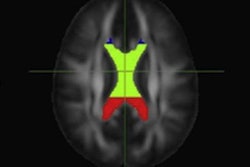
Due to its high sensitivity, MRI has established itself as the primary modality for assessing traumatic brain injuries and strokes. Diffusion-tensor MRI has proved particularly useful to evaluate the brain's white matter and the corpus callosum.
Now Swiss researchers have identified several key MRI-based indicators that can help determine how well pediatric patients will recover from a brain injury. They published their results online on 19 March in the European Journal of Radiology.
Did you know that breast MRI pioneer Dr. Christiane Kuhl runs a farm and looks after and rides horses in her spare time? In an exclusive interview, she reveals how these leisure activities help her to cope in tough times.
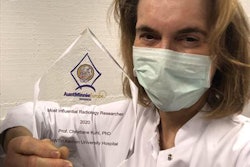
In late February, Kuhl and her U.S. colleagues revealed that abbreviated breast MRI identifies more invasive cancers in women with dense tissue than digital breast tomosynthesis. They published their important study findings in JAMA. During the same week, Kuhl was revealed as the winner of the Most Influential Radiology Researcher category in the 2020 EuroMinnies award scheme.
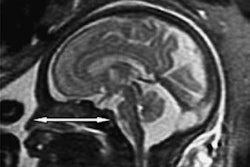
Meanwhile, Israeli investigators have established a set of benchmark measurements for fetal facial and cranial structures to help chart development over multiple gestation weeks. They published their experiences with MRI on 12 March in the European Journal of Radiology.
Many of you have followed our coverage of the serious MRI accident in Swedish Lapland. AuntMinnieEurope.com obtained a copy of the official police report. This document reveals much about how the specialist nurse came to be wearing a weighted exercise vest, and also about the metallic objects that were effectively turned into flying weapons before they became attached to the scanner.
This letter features only a few of the many articles posted over recent weeks in the MRI Community. Please scroll through the full list below and contact me if you have any ideas for coverage.