Dear AuntMinnieEurope Member,
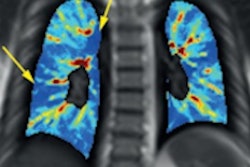
Vaping may not be as safe as previously thought. That's the central message of a new analysis from an experienced pair of researchers at a top university hospital in Belgium.
The radiologists have voiced strong concerns about e-cigarettes, particularly their toxicity, and have presented details about five relevant clinical cases. Don't miss our report in the CT Community.
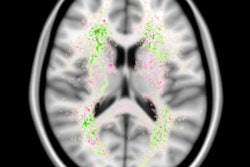
Meanwhile, a global team of investigators has organized a scientific challenge for developers of artificial intelligence (AI) software. The group found that deep-learning models can produce equivalent performance on images acquired at different institutions and on different scanner types. Using these methods in clinical practice may help to more precisely quantify the amount and distribution of white-matter hyperintensity lesions on MRI.
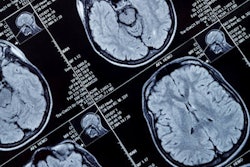
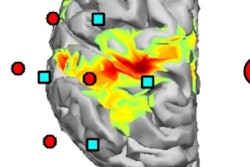
Also in the MRI Community, another group has used functional MR elastography (fMRE) to create maps of tissue stiffness that track the activity of brain function that occurs in bursts as short as 100 msec. The researchers think fMRE could be better than functional MRI (fMRI), because fMRI cannot keep pace with the split-second activity of the brain's neurons as they process thoughts and react to various stimuli.
The latest clinical breakthrough involving the use of 3D printing has occurred in Israel, where investigators have produced a 3D virtual heart model based on data from a patient's CT scans. They used computer-aided design software to add tiny blood vessels, not captured on conventional CT scans, to the 3D models to ensure adequate oxygen exposure to the heart. Head over to the Advanced Visualization Community.
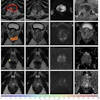
At the IEEE International Symposium on Biomedical Imaging in Venice earlier this month, presenters showed how an AI algorithm can enable less-experienced radiologists to better detect prostate cancer on multiparametric MRI. Get the full story.
Last but not least, we have a report about adaptive cardiac conebeam CT (ACROBEAT), a gated acquisition protocol that compensates for cardiac motion during the scan. ACROBEAT uses the patient's electrocardiogram signal to adaptively regulate gantry velocity and projection time interval, significantly reducing delivered dose while improving image quality.