Dear MRI Insider,
The number of requests for breast MRI examinations is rising, but in almost 9% of cases, the recommended referral guidelines are not followed, concluded an audit conducted at a district general hospital in northwest England.
The reasons for these inappropriate referrals are intriguing, and you can read about them here.
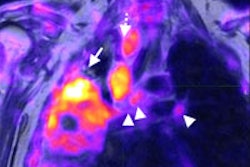
In lung cancer, PET/MRI may be superior to PET/CT in some patients, particularly when it comes to lymph node assessment. A study published online on 14 June in European Radiology has highlighted the promise of PET/MRI in this area, although the authors admit the technique must still provide a reliable and accurate attenuation correction map. Get the story here.
PET/MRI came under the spotlight during the 94th German radiology congress, the DRK, in Hamburg. The examination is technically quite demanding -- e.g., it's vital to ensure that the strong MRI magnetic fields do not interfere with PET diagnostic procedures -- but the potential benefits are considerable, according to researchers from the Institute of Diagnostic and Interventional Radiology at Essen. Click here to find out more.
Also at DRK 2013, the cost-effectiveness of breast MRI also came under scrutiny. It is perceived to be an expensive examination, but there is tremendous potential for breast MRI to save money if problem solving is considered as a potential new indication, according to Dr. Clemens Kaiser, from the department of clinical radiology at University Hospital Mannheim. He has both an MD qualification and a master's degree in economics, and is the son of Dr. Werner Kaiser, a pioneer in breast MRI, so he should know. Find out more here.
Last but not least, preliminary results published in European Radiology confirm that 7-tesla MRI of the pelvis is showing promise, though it remains a challenging technique. Click here for the details.
This is a brief selection of the articles posted in the MRI Digital Community. Please do check out the rest of them below this message.


![Overview of the study design. (A) The fully automated deep learning framework was developed to estimate body composition (BC) (defined as subcutaneous adipose tissue [SAT] in liters; visceral adipose tissue [VAT] in liters; skeletal muscle [SM] in liters; SM fat fraction [SMFF] as a percentage; and intramuscular adipose tissue [IMAT] in deciliters) from MRI. The fully automated framework comprised one model (model 1) to quantify different BC measures (SAT, VAT, SM, SMFF, and IMAT) as three-dimensional (3D) measures from whole-body MRI scans. The second model (model 2) was trained to identify standardized anatomic landmarks along the craniocaudal body axis (z coordinate field), which allowed for subdividing the whole-body measures into different subregions typically examined on clinical routine MRI scans (chest, abdomen, and pelvis). (B) BC was quantified from whole-body MRI in over 66,000 individuals from two large population-based cohort studies, the UK Biobank (UKB) (36,317 individuals) and the German National Cohort (NAKO) (30,291 individuals). Bar graphs show age distribution by sex and cohort. BMI = body mass index. (C) After the performance assessment of the fully automated framework, the change in BC measures, distributions, and profiles across age decades were investigated. Age-, sex-, and height-adjusted body composition reference curves were calculated and made publicly available in a web-based z-score calculator (https://circ-ml.github.io).](https://img.auntminnieeurope.com/mindful/smg/workspaces/default/uploads/2026/05/body-comp.XgAjTfPj1W.jpg?auto=format%2Ccompress&fit=crop&h=100&q=70&w=100)


![Overview of the study design. (A) The fully automated deep learning framework was developed to estimate body composition (BC) (defined as subcutaneous adipose tissue [SAT] in liters; visceral adipose tissue [VAT] in liters; skeletal muscle [SM] in liters; SM fat fraction [SMFF] as a percentage; and intramuscular adipose tissue [IMAT] in deciliters) from MRI. The fully automated framework comprised one model (model 1) to quantify different BC measures (SAT, VAT, SM, SMFF, and IMAT) as three-dimensional (3D) measures from whole-body MRI scans. The second model (model 2) was trained to identify standardized anatomic landmarks along the craniocaudal body axis (z coordinate field), which allowed for subdividing the whole-body measures into different subregions typically examined on clinical routine MRI scans (chest, abdomen, and pelvis). (B) BC was quantified from whole-body MRI in over 66,000 individuals from two large population-based cohort studies, the UK Biobank (UKB) (36,317 individuals) and the German National Cohort (NAKO) (30,291 individuals). Bar graphs show age distribution by sex and cohort. BMI = body mass index. (C) After the performance assessment of the fully automated framework, the change in BC measures, distributions, and profiles across age decades were investigated. Age-, sex-, and height-adjusted body composition reference curves were calculated and made publicly available in a web-based z-score calculator (https://circ-ml.github.io).](https://img.auntminnieeurope.com/mindful/smg/workspaces/default/uploads/2026/05/body-comp.XgAjTfPj1W.jpg?auto=format%2Ccompress&fit=crop&h=112&q=70&w=112)