Dear MRI Insider,
Can 3D turbo spin-echo sequences alone be used to assess the knee joint on 3-tesla MRI? No, says a respected group of MR researchers from University Hospital Antwerp in Belgium. They firmly believe that conventional 2D sequences still have a role in these examinations.
The group has recently published its findings in Insights into Imaging. Go to our MRI Digital Community, or click here.
The knee was the body part imaged most frequently at the polyclinic during the London 2012 Olympics and Paralympics, accounting for 16.9% of the 2,366 examinations. A total of 1,089 MRI investigations were carried out during the games, underlining the modality's importance in sports imaging. Get the story here.
For evaluating Crohn's disease activity and complications, MRI is an increasingly useful tool. It's particuarly valuable for assessing the extent and severity of the disease. Click here for some tips and tricks.
More turf battles between German cardiologists and radiologists now seem likely, following a change in the requirements for MRI certification at the local level. This was a very smart political move, and it means that cardiology can fast-track its own cardiologists in performing MRI scans, one senior radiologist told us. To read more, click here.
MR elastography is a promising technique that can spatially map and quantitatively describe displacement patterns corresponding to strain waves, in tissue-like materials. But what type of equipment produces the best results? A joint Portuguese-U.K. project tried to find out. Click here to learn more.
Ovarian cancer accounts for 4% of cancers in women and is responsible for 5% of cancer deaths. A stepwise approach to imaging analysis, associated with the knowledge of MRI-specific findings, is essential to identify the multiple ovarian cancer mimics, according to a Portuguese expert. Find out more here.
This is just a small sample of the host of stories available on the MRI Digital Community. Make sure you check out the rest of them.

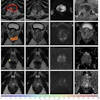


![Overview of the study design. (A) The fully automated deep learning framework was developed to estimate body composition (BC) (defined as subcutaneous adipose tissue [SAT] in liters; visceral adipose tissue [VAT] in liters; skeletal muscle [SM] in liters; SM fat fraction [SMFF] as a percentage; and intramuscular adipose tissue [IMAT] in deciliters) from MRI. The fully automated framework comprised one model (model 1) to quantify different BC measures (SAT, VAT, SM, SMFF, and IMAT) as three-dimensional (3D) measures from whole-body MRI scans. The second model (model 2) was trained to identify standardized anatomic landmarks along the craniocaudal body axis (z coordinate field), which allowed for subdividing the whole-body measures into different subregions typically examined on clinical routine MRI scans (chest, abdomen, and pelvis). (B) BC was quantified from whole-body MRI in over 66,000 individuals from two large population-based cohort studies, the UK Biobank (UKB) (36,317 individuals) and the German National Cohort (NAKO) (30,291 individuals). Bar graphs show age distribution by sex and cohort. BMI = body mass index. (C) After the performance assessment of the fully automated framework, the change in BC measures, distributions, and profiles across age decades were investigated. Age-, sex-, and height-adjusted body composition reference curves were calculated and made publicly available in a web-based z-score calculator (https://circ-ml.github.io).](https://img.auntminnieeurope.com/mindful/smg/workspaces/default/uploads/2026/05/body-comp.XgAjTfPj1W.jpg?auto=format%2Ccompress&fit=crop&h=100&q=70&w=100)


![Overview of the study design. (A) The fully automated deep learning framework was developed to estimate body composition (BC) (defined as subcutaneous adipose tissue [SAT] in liters; visceral adipose tissue [VAT] in liters; skeletal muscle [SM] in liters; SM fat fraction [SMFF] as a percentage; and intramuscular adipose tissue [IMAT] in deciliters) from MRI. The fully automated framework comprised one model (model 1) to quantify different BC measures (SAT, VAT, SM, SMFF, and IMAT) as three-dimensional (3D) measures from whole-body MRI scans. The second model (model 2) was trained to identify standardized anatomic landmarks along the craniocaudal body axis (z coordinate field), which allowed for subdividing the whole-body measures into different subregions typically examined on clinical routine MRI scans (chest, abdomen, and pelvis). (B) BC was quantified from whole-body MRI in over 66,000 individuals from two large population-based cohort studies, the UK Biobank (UKB) (36,317 individuals) and the German National Cohort (NAKO) (30,291 individuals). Bar graphs show age distribution by sex and cohort. BMI = body mass index. (C) After the performance assessment of the fully automated framework, the change in BC measures, distributions, and profiles across age decades were investigated. Age-, sex-, and height-adjusted body composition reference curves were calculated and made publicly available in a web-based z-score calculator (https://circ-ml.github.io).](https://img.auntminnieeurope.com/mindful/smg/workspaces/default/uploads/2026/05/body-comp.XgAjTfPj1W.jpg?auto=format%2Ccompress&fit=crop&h=112&q=70&w=112)