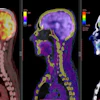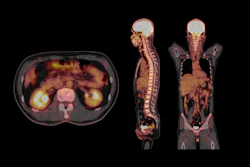
Pretreatment F-18 FDG-PET/CT scans are positive in 30.8% of patients with hepatocellular carcinoma (HCC) and significantly associated with clinical outcomes, according to a recent study.
The finding is from a literature review of 59 studies that included 8,585 patients and supports the use of FDG-PET/CT as a prognostic tool in HCC patients, the researchers noted.
"These findings support its prognostic relevance in HCC, while further studies may help refine its clinical role and standardize F-18 FDG-PET/CT-based risk stratification," wrote lead authors Ji Hye Min, MD, of Cedars-Sinai Medical Center in Los Angeles, and Mohammad Saeid Rezaee-Zavareh, MD, of the Middle East Liver Diseases Center in Tehran, Iran. The study was published May 20 in JHEP Reports.
HCC is one of the most common and aggressive malignancies worldwide, and despite diverse therapeutic options, the prognosis of HCC remains poor, with a five-year survival rate of less than 20% for advanced stages, the authors noted. While F-18 FDG-PET/CT is not currently recommended in major international guidelines for HCC diagnosis or surveillance, early studies suggest it may be a promising tool for assessing tumor metabolism and treatment response, they added.
To further assess its prognostic value, the investigators performed a systematic review and meta-analysis. They identified 59 eligible studies encompassing 8,585 patients. Studies were included if they reported pretreatment F-18 FDG PET/CT findings linked to overall survival (OS), recurrence-free survival (RFS), or progression-free survival (PFS).
 A graphical abstract of the study.JHEP Reports
“Elevated FDG uptake was consistently associated with poorer OS, RFS, and PFS, supporting the value of PET/CT as a prognostic biomarker,” they wrote.
The researchers noted that variability in PET/CT parameter cutoffs among the studies and lack of raw data prevented continuous variable analysis and standardization. As a result, no unified FDG uptake threshold could be established, which limits its direct clinical application. Nonetheless, the review demonstrates that F-18 FDG-PET/CT is a significant prognostic indicator, the team noted.
"Further studies may help refine its optimal clinical role, standardize PET/CT parameters and cutoffs, and identify settings in which it provides the greatest incremental value for treatment planning and risk stratification," it concluded.
The full study is available here.