Dear AuntMinnieEurope Member,
There's a growing consensus that AI has a key role to play in prostate MRI workflow. But how, exactly?
Two leading oncologic imaging specialists, Prof. Anwar Padhani and Nickolas Papanikolaou, PhD, have addressed this question in an important new study and YouTube video. Their findings deserve a close look.
Meanwhile, Swiss researchers have evaluated the impact of photon-counting CT on radiation dose. Accurate semiautomated and manual nodule measurements are feasible on x-ray dose scans, but nodule density tended to be underestimated, the authors found.
The ECR exhibit halls always cast light on emerging market trends in medical imaging. Poornima Anil, a senior market analyst at Signify Research, has provided a neat summary of what the major vendors displayed in Vienna. Don't miss her report and analysis from the congress.
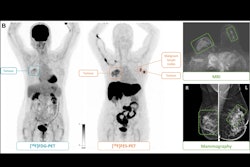
In other news, a team from the Free University of Amsterdam has investigated whether using F-18 fluoroestradiol PET as the primary staging modality instead of F-18 FDG-PET can improve outcome in low-grade estrogen receptor-positive breast cancer.
To end this week, we have an update from a medicolegal legal case in the U.K. After an illicit sexual encounter on a train, radiologist Dr. Mark Elias at the Christie NHS Foundation Trust in Manchester has avoided a jail sentence, but he now faces a General Medical Council investigation.
Philip Ward
Editor in Chief
AuntMinnieEurope.com








![Overview of the study design. (A) The fully automated deep learning framework was developed to estimate body composition (BC) (defined as subcutaneous adipose tissue [SAT] in liters; visceral adipose tissue [VAT] in liters; skeletal muscle [SM] in liters; SM fat fraction [SMFF] as a percentage; and intramuscular adipose tissue [IMAT] in deciliters) from MRI. The fully automated framework comprised one model (model 1) to quantify different BC measures (SAT, VAT, SM, SMFF, and IMAT) as three-dimensional (3D) measures from whole-body MRI scans. The second model (model 2) was trained to identify standardized anatomic landmarks along the craniocaudal body axis (z coordinate field), which allowed for subdividing the whole-body measures into different subregions typically examined on clinical routine MRI scans (chest, abdomen, and pelvis). (B) BC was quantified from whole-body MRI in over 66,000 individuals from two large population-based cohort studies, the UK Biobank (UKB) (36,317 individuals) and the German National Cohort (NAKO) (30,291 individuals). Bar graphs show age distribution by sex and cohort. BMI = body mass index. (C) After the performance assessment of the fully automated framework, the change in BC measures, distributions, and profiles across age decades were investigated. Age-, sex-, and height-adjusted body composition reference curves were calculated and made publicly available in a web-based z-score calculator (https://circ-ml.github.io).](https://img.auntminnieeurope.com/mindful/smg/workspaces/default/uploads/2026/05/body-comp.XgAjTfPj1W.jpg?auto=format%2Ccompress&fit=crop&h=112&q=70&w=112)


