Myocardial perfusion imaging (MPI) tests that are used to help identify patients who might benefit from invasive coronary artery disease assessment have come under scrutiny in research from the Dan-NICAD 2 trial presented at the European Society of Cardiology (ESC) annual congress in Barcelona.
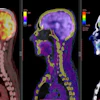
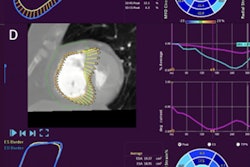
The two tests used to assess whether patients with suspected obstructive stenosis on coronary CT angiography (CTA) should go forward with invasive coronary angiography with fractional flow reserve (ICA-FFR) are MPI via 3-tesla cardiac MRI exam and MPI via rubidium-82 PET (Rb-PET) exam. These tests have high specificity but low sensitivity, said presenter Prof. Dr. Morten Bøttcher of Aarhus University in Denmark.
"We only show that the two techniques differ -- we do not conclude which one is the best to guide therapy. It could be FFR needs improvement. So the key word here is discrepancy," Bøttcher told AuntMinnieEurope.com.
In a discussion of results from the Dan-NICAD 2 trial, Bøttcher and colleagues compared the performance of the two MPI tests in a study that included data from 372 patients with suspected obstructive coronary artery disease who underwent CTA. All had both MPI tests as well as ICA-FFR for reference. Obstructive coronary artery disease was identified in 44.1% of these 372 patients during ICA-FFR.
The researchers found the following regarding the performance of the two MPI tests for identifying obstructive coronary artery disease:
- Cardiac MRI had a sensitivity of 59%, while Rb-PET had sensitivity of 64%.
- Specificity for cardiac MRI was 84% and for Rb-PET was 89%.
- Cardiac MRI showed a positive predictive value of 76% and Rb-PET had a positive predictive value of 79%.
- Negative predictive value was 73% for cardiac MRI and 73% for Rb-PET.
- Overall accuracy was 73% for cardiac MRI and 78% for Rb-PET.
Most patients who are referred for coronary CT angiography with suspected coronary artery disease do not have obstructive disease, Bøttcher noted. When obstructive disease is found on coronary CTA, MPI exams are typically used to select patients for potential revascularization.
"Our results show that while these imaging modalities identify patients with the most severe stenoses and high-risk coronary artery disease, they are less sensitive in patients with moderate stenoses and borderline or gray-zone fractional flow reserve values who are prevalent in this setting," Bøttcher said in a statement released by ESC. "This means that many patients could avoid invasive testing if we apply second-line perfusion imaging."