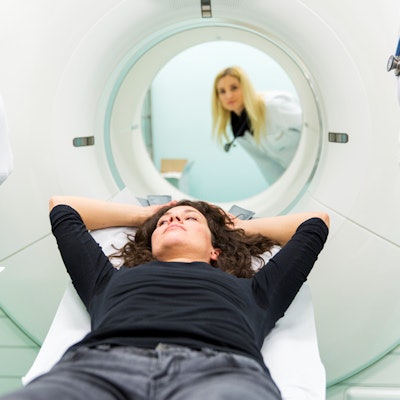
Radiology departments should review their existing and future organization with the imaging team to improve patient communication, according to a statement posted on 22 March in Insights into Imaging.
The report from the Patient Advisory Group (PAG) of the European Society of Radiology (ESR) points out that radiology departments and medical imaging services are not always dedicated to patients' needs and expectations and that patient-centered radiology is key to meeting patients' demands.
"Empathy, listening, patience and understanding are qualities that must be developed in all medical imaging teams, starting from the first person in contact with the patient, throughout the whole course of the examination, including waiting for results," the authors noted. "The patient must feel that they are the focus of attention of care teams."
Explanations must be given throughout the examination, covering aspects such as specific preparations for an examination, need for injection, radiographers’ expectations of the patient (e.g. mobility issues or frailty), updates on prolonged waiting times, and the need for any further injection or any additional imaging with another modality.
Radiology staff should use this statement to provide patient-focused services daily, the authors wrote.







![Overview of the study design. (A) The fully automated deep learning framework was developed to estimate body composition (BC) (defined as subcutaneous adipose tissue [SAT] in liters; visceral adipose tissue [VAT] in liters; skeletal muscle [SM] in liters; SM fat fraction [SMFF] as a percentage; and intramuscular adipose tissue [IMAT] in deciliters) from MRI. The fully automated framework comprised one model (model 1) to quantify different BC measures (SAT, VAT, SM, SMFF, and IMAT) as three-dimensional (3D) measures from whole-body MRI scans. The second model (model 2) was trained to identify standardized anatomic landmarks along the craniocaudal body axis (z coordinate field), which allowed for subdividing the whole-body measures into different subregions typically examined on clinical routine MRI scans (chest, abdomen, and pelvis). (B) BC was quantified from whole-body MRI in over 66,000 individuals from two large population-based cohort studies, the UK Biobank (UKB) (36,317 individuals) and the German National Cohort (NAKO) (30,291 individuals). Bar graphs show age distribution by sex and cohort. BMI = body mass index. (C) After the performance assessment of the fully automated framework, the change in BC measures, distributions, and profiles across age decades were investigated. Age-, sex-, and height-adjusted body composition reference curves were calculated and made publicly available in a web-based z-score calculator (https://circ-ml.github.io).](https://img.auntminnieeurope.com/mindful/smg/workspaces/default/uploads/2026/05/body-comp.XgAjTfPj1W.jpg?auto=format%2Ccompress&fit=crop&h=112&q=70&w=112)


