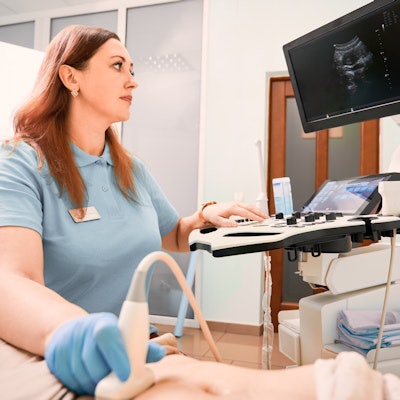
The U.K. Society of Radiographers (SoR) is drawing attention to a statement written by a team of sonographers and patients on "etiquette" for obstetric examination.
The statement addresses what can be a tricky navigation of expectations about obstetric ultrasound scans, according to a team led by Donna White of East and North Hertfordshire National Health Service Trust.
"Popular media tends to portray obstetric ultrasound scans as joyful events where everyone is smiling, the lights are always on and the telling of the baby's sex plays a big part in the drama of the event," White's team wrote.
"Real scans are not like this. They are quiet and serious affairs which require great concentration by the professionals involved. And while sonographers also love to share the joy of a pregnancy with their clients, sadly not every pregnancy is a joy, not every scan is a happy occasion," the group noted.
The COVID-19 pandemic changed the dynamics of the obstetric ultrasound, in part because the partners and children of the pregnant woman were not able to attend the exam.
"For some, the thought of attending a scan alone was unthinkable," the authors wrote. "For other women, the enforced solitude in the scan room offered a chance to listen, concentrate and interact with their healthcare professionals in a real synergy of care."
It may be that post COVID-19, obstetric ultrasound etiquette will change, the team concluded.
"COVID-19 has given us the chance to reset our relationship with our service users, which is to everyone's benefit," White and her colleagues pointed out. "We hope we have come through the pandemic to a level of greater understanding."