It's clear there's no quick fix to the pandemic, Morag Stout, a consultant sonographer at NHS Greater Glasgow and Clyde, U.K., has written in an article posted on the Society and College of Radiographers (SCoR) website. "This pandemic is not a short, sharp shock; it is a marathon," she noted.
As hospitals continue to adjust to the current situation, the challenges of social distancing, personal protective equipment (PPE) availability, staff shielding, limited access to equipment and waiting areas, and patient anxiety and staff morale are important considerations. The volume of imaging requests is returning to near prepandemic levels with no signs of abating, but now staff are adapting to the high demand with different safety protocols involved, she continued.
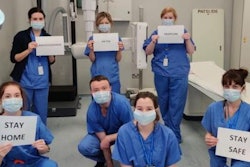
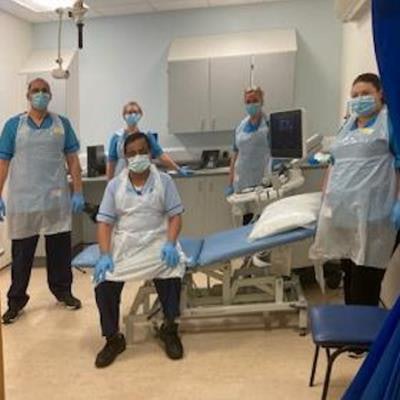
 Morag Stout, along with her sonographer colleagues. Image courtesy of the Society and College of Radiographers.
The pandemic necessitated imaging urgent or semiurgent cases, but there's also an imaging backlog, which sonographers are skeptical they'll be able to clear. To deal with the problem, the Scottish government has advocated for a national sonographer bank to allow for cross-boundary working and to reduce the need for locums. However, it is unclear if this idea will come to fruition, according to Stout.
In addition, the pandemic has revealed to the public the vital role medical staff play and demonstrates the need for respect and appreciation, she added. Governments must now invest in health systems, especially regarding diagnostics, otherwise they'll have to deal with the consequences of delayed diagnoses or treatment.