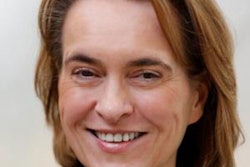
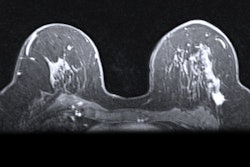
In trying times, all of us look for certainty in our lives. For Dr. Christiane Kuhl, the leading radiology researcher, a solid and constantly reassuring aspect of her life is her family. In part 2 of our exclusive interview, she talks about her family and her department.
"I am an absolute family animal. We always wanted to have children and a huge family, but somehow it did not work out. But I am very close with my parents and brother and sister. They come to our place not only to celebrate birthdays and Christmas and Easter, but on every possible occasion throughout the year," explained Christiane, who is head of radiology at RWTH Aachen University, Germany.
"Keeping a family together does not happen by itself. Just like doing research, this is often hard work, and something you should really want to do. But if you succeed, if you manage to heal or work around old injuries or rivalries, it is just the most precious and satisfying thing in life -- at least to me," she said.
 Christiane (left) enjoys a hug from sister Gitta last November.
Since 2010, Christiane has derived particular pleasure from being department chair, responsible for around 120 staff.
"I have a wonderful department. It is such a privilege to work with enthusiastic people, to help them develop their talents, to see them grow and assume responsibility -- I am very proud of them!" she noted. "I love my department and I receive so much support and affection from them -- it's sort of a large family for me. They know I do everything to support them, help them the best I can to make good decisions in life. And I know they would do the same for me."
Christiane's parents
Christiane is not from a medical background. Her parents ran a successful horticulture business.
Her mother, Anne, was born in 1942 and was the youngest child born to a family of railway workers. At 21, Anne went to London to study English for a year, and financed this by working as an au pair.
 Christiane's mum Anne went to London in the early 1960s to study English for a year at only 21.
"My mum organized all of this alone, behind the back of her parents, who were mad at her when they found out that she planned to leave home," Christiane said. "When my mum returned home, she worked as a foreign language correspondent in international firms in Bonn. She planned to travel the world with international friends she had made during her year in London, but then she met my father, fell in love -- and, voilà, they became husband and wife."
Christiane's father, Guenther, was born in 1940, as the youngest of seven children. Guenther had no chance to attend high school or university.
"Even so, he has always been a scholar, very open-minded and curious to test new technology," Christiane noted. "Reading is his main pastime, especially about science, politics, and history. I always consider him a truly academic person."
 Christiane's dad Guenther loves learning about science and technology.
Guenther's mother was diagnosed with breast cancer after giving birth to him, and his mother developed brain metastases when he was only 11.
"At that time, the youngest family member -- my dad -- was the one to watch her, and it was even his duty to inject her diazepam to treat her generalized seizures -- imagine, a child! But this was the time when something like that was considered normal," Christiane said.
Christiane's brother, sister, and life partner
Anne and Guenther had three children: Stephan (born 1965), Christiane (1966), and Gitta (1967).
Stephan studied business management, graduating as an economist.
 Christiane's brother Stephan has inherited his dad's passion for politics and history.
"Stephan was one of the most successful students of his graduation year at Munich University (LMU) and thus received offers for positions in big German companies like BMW and Siemens. But he decided to leave this field, return home, and take over my parents' business," Christiane said.
Gitta trained to be a tax controller, and went on to study finance. Gitta now works with her husband in a small company that sells building materials.
 Kuhl family celebrations are never dull! From the left: sister Gitta, Gitta's son Marcian, mother Anne, and father Guenther.
Christiane's long-term partner, Heribert, is a computer scientist. Heribert studied information and computer sciences at the University of Bonn and ran his own software company, but today he works mainly as an editor of scientific texts.
Down on the farm
In the first part of this interview, Christiane spoke about her farm and how it is important for her mental health and happiness. While she is working long hours in Aachen during the COVID-19 crisis, she feels reassured that the farm is in very safe hands.
 Giddy-up! Dorothea with Christiane and the Shetland ponies.
"Sabine, Michelle, Dorothea, Lisa, Danina, Karina, and Kim are looking after the horses, and they also help groom and feed them and clean and maintain the stables. In addition, we have hired two more people, Sarah and Ed, who feed the horses over the day and help clean the stable and the green fields," she said.
Christiane very much looks forward to when she can return to the farm to see her friends and enjoy some downtime.