Dear AuntMinnieEurope Member,
You have to admire the courage of Dr. Adrian Brady from Dublin. He's tackled head-on one of the most urgent and challenging issues faced by medical imaging today: the workload of a radiologist.
"Our work is visualized in terms of x-rays or cross-sectional studies reported; if we are generating reports, we are working. If we are not producing reports, then we are not being productive," he noted.
His analysis and viewpoint will be of great interest to everybody working in the field. For more of his words of wisdom, click here.
Brain drain also is a constant concern in some countries, particularly those in Central and Eastern Europe. Hungary is continuing to lose many radiologists to Scandinavia, Germany, the U.K., and the Republic of Ireland, and this is having a huge impact on the nation's healthcare system. Our Hungarian-based correspondent, Robin Marshall, has investigated this problem, and you can read his in-depth article by clicking here.
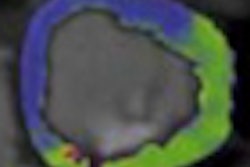
The University of Munich is a leading global research center, and any new studies conducted there warrant close scrutiny. Dr. Konstantin Nikolaou and his team have found that CT can play a role in functional cardiac imaging with the use of a dynamic CT perfusion technique they have developed that measures myocardial blood flow. Click here for the full story.
Gun crime is increasing at an alarming rate in many societies, and this means hospitals are now treating more cases of gunshot injuries than ever before. Plain radiography and CT are still the most commonly used modalities for imaging of gunshot wounds, but angiography and MRI are playing an increasing role. Click here for the story.