Radiation therapy vendor Varian Medical Systems has inked an agreement with Indonesia's first private cancer hospital to provide radiotherapy treatments, the Palo Alto, CA-based company said.
Varian and Siloam Hospitals of Jakarta will collaborate on delivering cancer treatment in Indonesia, particularly at the Mochtar Riady Comprehensive Cancer Centre (MRCCC), which plans to acquire two Clinac iX linear accelerators that feature On-Board Imager devices that allow for targeted image-guided radiotherapy (IGRT).
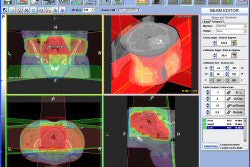
Varian has also signed an agreement with Ghent University Hospital in Ghent, Belgium, to provide its RapidArc technology for modulated arc therapy treatments. RapidArc delivers a volumetric intensity-modulated radiation therapy (IMRT) treatment in a single arc of the treatment machine around the patient. RapidArc also makes it possible to deliver image-guided IMRT faster than can be provided with conventional IMRT, according to Varian.
Related Reading
Varian, BrainLab land Danish orders, July 25, 2008
Varian grows Q3 sales, earnings, July 24, 2008
FL facility treats carcinoma with Varian's RapidArc, July 23, 2008
NY center starts Varian radiotherapy, July 11, 2008
Varian inks deal with Toshiba, June 11, 2008
Copyright © 2008 AuntMinnie.com





![Overview of the study design. (A) The fully automated deep learning framework was developed to estimate body composition (BC) (defined as subcutaneous adipose tissue [SAT] in liters; visceral adipose tissue [VAT] in liters; skeletal muscle [SM] in liters; SM fat fraction [SMFF] as a percentage; and intramuscular adipose tissue [IMAT] in deciliters) from MRI. The fully automated framework comprised one model (model 1) to quantify different BC measures (SAT, VAT, SM, SMFF, and IMAT) as three-dimensional (3D) measures from whole-body MRI scans. The second model (model 2) was trained to identify standardized anatomic landmarks along the craniocaudal body axis (z coordinate field), which allowed for subdividing the whole-body measures into different subregions typically examined on clinical routine MRI scans (chest, abdomen, and pelvis). (B) BC was quantified from whole-body MRI in over 66,000 individuals from two large population-based cohort studies, the UK Biobank (UKB) (36,317 individuals) and the German National Cohort (NAKO) (30,291 individuals). Bar graphs show age distribution by sex and cohort. BMI = body mass index. (C) After the performance assessment of the fully automated framework, the change in BC measures, distributions, and profiles across age decades were investigated. Age-, sex-, and height-adjusted body composition reference curves were calculated and made publicly available in a web-based z-score calculator (https://circ-ml.github.io).](https://img.auntminnieeurope.com/mindful/smg/workspaces/default/uploads/2026/05/body-comp.XgAjTfPj1W.jpg?auto=format%2Ccompress&fit=crop&h=112&q=70&w=112)


