Dear AuntMinnieEurope Member,
Friday the 13th of October promises to be an extremely lucky day for French radiology because it marks the beginning of the four-day national congress, Journées Francophones de Radiologie (JFR) 2023.
As the doors of the Palais des Congrès de Paris prepare to burst open, this seems like an excellent time to remember the life and achievements of the country's most celebrated radiologist, Antoine Béclère. Our history columnist Dr. Adrian Thomas tells the story of this remarkable man. Also, make sure you check out our homepage over the next few days for news coverage of JFR.
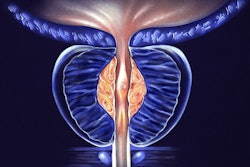
For some years now, experts have called for more standardization of prostate MRI acquisition parameters, but there still appears to be some way to go. International guidelines for prostate cancer diagnosis have led to a steep increase in the demand for the technique, but variations in user protocols continue to exist, U.K. researchers have found. Get the full story in the MRI Community.
Gadolinium retention has been a controversial topic for nearly a decade now. To bring clarity, a team of European MRI safety experts has looked at the background and the current state of knowledge about the use of gadolinium-based contrast agents.
Radiologists are united by a desire to improve their reporting style, so it's no surprise that new research published by the European Journal of Radiology has proved popular.
Another subject that always generates interest at this time of year is the Nobel Prize. The work of Moungi Bawendi, PhD, has had a major impact on imaging, according to the Nobel judges, who have awarded the chemistry prize to the Franco-American-Tunisian professor born in Paris in 1961. Learn more about him in the Molecular Imaging Community.





![A normal mammogram confirmed by three-year radiologic follow-up illustrates reader-marked regions of interest (ROIs) during (A) unaided (round 1) and (B) artificial intelligence (AI)–assisted (round 2) reading. Each colored dot represents an ROI for recall by a human reader. Readers could mark more than one ROI per case, represented by multiple dots of the same color. During AI-assisted reading, the AI system displayed three visible prompts: two with suspicion of malignancy scores of 35% (left mediolateral oblique [L MLO] and craniocaudal [L CC]) and one with a suspicion of malignancy score of 10% (right craniocaudal [R CC]), shown as polygonal overlays. Without AI, six of 10 readers (60%) marked a false-positive ROI. With AI assistance, this fell to two of 10 (20%). R MLO = right mediolateral oblique.](https://img.auntminnieeurope.com/mindful/smg/workspaces/default/uploads/2026/07/2026-07-14-radiology-mammogram-ai-auto-bias.H0bYO8QlWs.jpg?auto=format%2Ccompress&dpr=2&fit=crop&h=167&q=70&w=250)

