Dear Women's Imaging Insider,
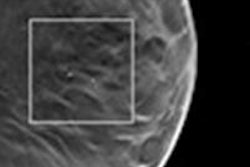
Full-field digital mammography (FFDM) has long been considered the best imaging modality to detect calcifications and microcalcifications, but is that still true when compared with digital breast tomosynthesis (DBT)? Researchers from Italy and Austria decided to investigate the topic, and they presented their findings at last month's ECR 2015.
They pitted FFDM against DBT in a multireader observer study to see which modality would come out on top. As an added layer, they split the readers into two groups: experienced and inexperienced. What were their results? Find out.
Also in your Women's Imaging Community, be sure to check out a story on quality control -- always a concern. New evidence reveals issues affecting mammography practice have drastically improved since quality control was introduced eight years ago across Bulgaria. This is prior to introducing national breast cancer screening, which is a great help. Read more.
U.K. national breast screening guidelines have a minimum standard of less than 10% and an expected standard of less than 7% for breast MRI recall rates. Is that achievable? An Irish study finds the answer is, "Maybe."
St. James's Hospital in Dublin recorded its breast MRI recall rate as 10.8%, which is in line with other published data, but those rates could be even lower given the right conditions. How does your institution compare? Let us know by posting a comment below the article.
Another study on MRI finds it is possible to pinpoint malignancy in extramammary disease. Croatian researchers conclude assessing the entire field-of-view carefully for abnormalities on breast MRI studies is vital, because some incidental extramammary findings are malignant, and this alters diagnostic workup, staging, and treatment.
In this issue, we also have a story on fetal MRI, which may help when a facial abnormality is suspected on routine prenatal ultrasound. There's also an article on MRI's expanding role in the planning, safety, evaluation, and success of uterine artery embolization, for which Portuguese researchers won a Magna Cum Laude award at ECR 2015.
Be sure to check out the rest of the stories in your Women's Imaging Community. As always, I love to hear from you, so contact me anytime.