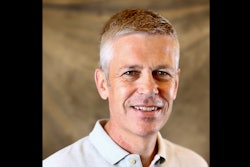
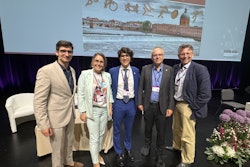
At home, the recycler, but at work, the problem. That contradiction, called out plainly by Dr. Lucien Widmer of Cantonal Hospital Fribourg in Fribourg, Switzerland, opened an honest ECR 2026 session on sustainability in the hospital lifecycle.
"I wonder if I'm the only one to have this unpleasant impression of having a split personality," he said.
Numbers nobody argues with
Healthcare accounts for 4.4% of global net emissions. Medical devices sit at around 30% of that. Radiology's share is roughly 7.5%, rising to up to 20% in university hospitals. Those figures came from Célia Doussineau, of the European Coordination Committee of the Radiological, Electromedical and Healthcare IT Industry (COCIR) in Brussels, Belgium.
COCIR members began work on circular economy principles more than 25 years ago. In 2020, the Medical Equipment Proactive Alliance for Sustainable Healthcare (MEPA) was established, a joint initiative of COCIR, HealthTrust, and Vizient, developed in consultation with the Global Electronics Council and Kaiser Permanente.
MEPA developed 49 sustainability criteria for purchasing medical imaging devices that cover life-cycle assessment, climate change mitigation, sustainable use of resources, and chemicals of concern, as well as environmental, social, and governance (ESG) performance. There are three levels: basic, intermediate, and advanced. The advanced level is complex and difficult to meet.
A revised COCIR energy methodology for MRI was released in 2025, the first update in 15 years, with new power-save mode guidance and a user calculator for tailored energy consumption estimates. Criteria and documentation are publicly available at mepaalliance.org. A draft MEPA guidance document on the criteria was in public consultation in January 2026.
Not starting from zero
The split personality has a specific texture. It is not just cognitive dissonance. It is the feeling that the problem is too large for any individual action to matter.
"The general impression that in any case, the issue is far beyond our control and that our contribution will have no impact," Widmer said. "That's frustrating."
His answer to that frustration was structure. Widmer's department of 35 radiologists across four locations created a Green Committee named "Code Green" and gave it equal institutional standing alongside the education and research committees. Twice-monthly journal clubs, posters in staff rooms, and sustainability were built into department culture rather than added on top of it.
Practical actions the department took included the following:
- All CT and MRI protocols were reviewed for evidence-based short alternatives.
- High-relaxivity gadolinium-based contrast agents were adopted as the primary MRI contrast, reducing the volume of gadolinium injected per patient and the amount of heavy metal entering the water system.
- Multidose vials replaced prefilled syringes.
- IT implemented end-of-day computer shutdown scripts.
- The team began to develop centralized energy-monitoring dashboards.
"The journey is not always easy," Widmer said, noting the challenges of technical disruption, skepticism, and resistance. The question of whether individual effort inside a single department can move a problem this large runs through the rest of the session, too.
The oil tanker problem
Bruno Tonello, of University College London Hospitals NHS Foundation Trust in London, U.K., named the structural problem directly: Large organizations move like oil tankers. Top-down sustainability objectives permeate through 20-plus layers before reaching a department.
Tender assessment for imaging equipment now includes sustainability scoring, a minimum 10% of the overall score in his trust, in line with the U.K. NHS mandatory social value weighting requirement introduced in 2022. But generic questions miss critical specifics: nonquench MRI scanners, rebuilt equipment, and component assembly origin.
At ECR 2026, Tonello said he had just heard a framing for the first time: If a device uses less power, calculate that saving over the life of the asset and factor it into the procurement decision. "Wow, that's never occurred to me," he said.
A CT injector exercise run across two trusts started as a simple syringe-versus-reservoir comparison. Within two weeks, it had drawn in five additional departments: pharmacy, supplies, infection control, and others. Tonello proposed an "integrated sustainability pathway," modeled on patient pathway reviews, to capture what departmental siloes miss.
Hospital design carries sustainability consequences that procurement processes do not account for. Tonello described a facility where scanner replacement had been engineered into the building: scanners entering through windows, weight loads in corridors precalculated, and rooms modular enough to convert between modalities.
Alignment
Networking between institutions is almost entirely absent, Tonello added. "I have no idea if anyone scores the same way we do." Doussineau pushed the same point from the industry side: "If we collaborate, we can put something together that could help us go faster and stronger."
Widmer had an answer to that, too.
"With each step, I feel a bit more myself at work, more in alignment with my values," he said. "Each improvement helps our department, our patient, and our planet."