
Radiology artificial intelligence (AI) software developer Oxipit said that the European Patent Office has approved its patent application for technology designed to facilitate training of machine-learning models using high-resolution chest x-rays.
Although AI algorithms are typically optimized for working with 0.1-megapixel images, modern x-ray systems commonly generate larger images with 16-megapixel resolution, Oxipit said. Patent EP3651117 addresses the challenges of training algorithms with these higher-resolution images by, for example, eliminating irrelevant pixels from the radiograph, such as from regions that aren't related to the diagnosis, according to the company.
Oxipit believes the patent is particularly relevant for improving the accuracy of algorithms for detecting lung cancer.


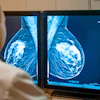






![A normal mammogram confirmed by three-year radiologic follow-up illustrates reader-marked regions of interest (ROIs) during (A) unaided (round 1) and (B) artificial intelligence (AI)–assisted (round 2) reading. Each colored dot represents an ROI for recall by a human reader. Readers could mark more than one ROI per case, represented by multiple dots of the same color. During AI-assisted reading, the AI system displayed three visible prompts: two with suspicion of malignancy scores of 35% (left mediolateral oblique [L MLO] and craniocaudal [L CC]) and one with a suspicion of malignancy score of 10% (right craniocaudal [R CC]), shown as polygonal overlays. Without AI, six of 10 readers (60%) marked a false-positive ROI. With AI assistance, this fell to two of 10 (20%). R MLO = right mediolateral oblique.](https://img.auntminnieeurope.com/mindful/smg/workspaces/default/uploads/2026/07/2026-07-14-radiology-mammogram-ai-auto-bias.H0bYO8QlWs.jpg?auto=format%2Ccompress&dpr=2&fit=crop&h=167&q=70&w=250)


