Will artificial intelligence make physicians obsolete? A debate published online on 7 November in the BMJ explores the question.
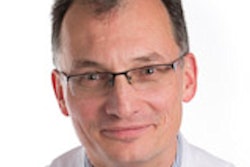
Dr. Jörg Goldhahn of the Institute for Translational Medicine at ETH Zurich, Switzerland, and colleagues discussed whether machines will ever completely replace doctors. The technology may prove to be more accurate than people at making diagnoses and performing surgical interventions, and has a "near unlimited capacity" for data processing and subsequent learning. It can also do this at a speed that humans cannot match, Goldhahn said in a statement released by the BMJ.
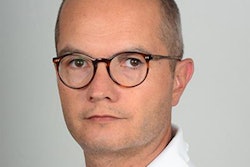
But colleagues Vanessa Rampton, PhD, of the McGill Institute for Health and Social Policy in Montreal, and Dr. Giatgen Spinas of University Hospital in Zurich argue that "machines will never replace doctors entirely because the interrelational quality of the doctor-patient relationship is vital and cannot be replicated."
"Computers aren't able to care for patients in the sense of showing devotion or concern for the other as a person, because they are not people and do not care about anything," Rampton and Spinas said in the statement. "Sophisticated robots might show empathy as a matter of form, just as humans might behave nicely in social situations yet remain emotionally disengaged because they are only performing a social role."