Dear AuntMinnieEurope Member,
Artificial intelligence (AI) may be all the rage right now, but who's making sure that the technology will be used ethically?
That's the question raised in a new article in our Artificial Intelligence Community. Italian researchers recently raised a host of new questions about AI, such as the balance between patient privacy and AI's ability to acquire massive volumes of personal data. Another important issue is the security of patient data held in large archives that are used to train AI algorithms. Read more about these intriguing questions by clicking here.
In other news, the European Society of Cardiology annual congress wrapped up on Wednesday in Munich, and there was a plethora of new research on cardiac imaging presented.
For example, a multinational team that included researchers from the U.K. and Germany reported that coronary CT angiography (CCTA) can measure fatty tissue around the arteries that could be an indicator of future risk of heart disease mortality. And new data was presented from the Scottish Computed Tomography of the Heart (SCOT-HEART) trial, indicating that adding CCTA to the standard workup of patients with chest pain could cut their risk of heart attack and death by 41%. Get more details by clicking here.
Farther afield, new guidelines on breast ultrasound have been released that clarify that the modality should not be used alone for screening, while researchers from London have created an online tool that went live on 24 August for predicting the risk of breast cancer recurrence.
And finally, be sure to visit our Molecular Imaging Community for an article on how Dutch researchers used FDG-PET/CT for calculating the risk of interval metastasis during neoadjuvant chemoradiotherapy for esophageal cancer.

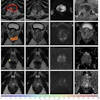


![A normal mammogram confirmed by three-year radiologic follow-up illustrates reader-marked regions of interest (ROIs) during (A) unaided (round 1) and (B) artificial intelligence (AI)–assisted (round 2) reading. Each colored dot represents an ROI for recall by a human reader. Readers could mark more than one ROI per case, represented by multiple dots of the same color. During AI-assisted reading, the AI system displayed three visible prompts: two with suspicion of malignancy scores of 35% (left mediolateral oblique [L MLO] and craniocaudal [L CC]) and one with a suspicion of malignancy score of 10% (right craniocaudal [R CC]), shown as polygonal overlays. Without AI, six of 10 readers (60%) marked a false-positive ROI. With AI assistance, this fell to two of 10 (20%). R MLO = right mediolateral oblique.](https://img.auntminnieeurope.com/mindful/smg/workspaces/default/uploads/2026/07/2026-07-14-radiology-mammogram-ai-auto-bias.H0bYO8QlWs.jpg?auto=format%2Ccompress&fit=crop&h=100&q=70&w=100)


![A normal mammogram confirmed by three-year radiologic follow-up illustrates reader-marked regions of interest (ROIs) during (A) unaided (round 1) and (B) artificial intelligence (AI)–assisted (round 2) reading. Each colored dot represents an ROI for recall by a human reader. Readers could mark more than one ROI per case, represented by multiple dots of the same color. During AI-assisted reading, the AI system displayed three visible prompts: two with suspicion of malignancy scores of 35% (left mediolateral oblique [L MLO] and craniocaudal [L CC]) and one with a suspicion of malignancy score of 10% (right craniocaudal [R CC]), shown as polygonal overlays. Without AI, six of 10 readers (60%) marked a false-positive ROI. With AI assistance, this fell to two of 10 (20%). R MLO = right mediolateral oblique.](https://img.auntminnieeurope.com/mindful/smg/workspaces/default/uploads/2026/07/2026-07-14-radiology-mammogram-ai-auto-bias.H0bYO8QlWs.jpg?auto=format%2Ccompress&fit=crop&h=112&q=70&w=112)