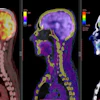
Dual PET imaging and the NETPET score are proving increasingly useful in the prognosis and treatment of neuroendocrine tumors (NETs), a leading Australian research group has asserted.
"Dual PET imaging is crucial in the diagnosis and management of gastroenteropancreatic NETs (GEP-NETs)," noted Dr. Claire Mok, a nuclear medicine and provisional theranostics fellow, and colleagues in the Department of Nuclear Medicine at Royal North Shore Hospital, Sydney.
In this context, dual PET imaging refers to gallium-68 (Ga-68)-DOTATATE PET and F18 FDG PET, Mok explained. It involves two separate PET scans, but the interpretation together provides key prognostic and clinical information for patients with GEP-NETs. These exams have important advantages over conventional imaging, such as CT or MRI, in providing key prognostic and predictive information, and have a key role in guiding treatment decisions, she added.
NETs are a rare and heterogeneous group of tumors arising throughout the body, and in cases of GEP-NETs, patients have extremely varied clinical courses, despite validated clinical prognostic factors, the researchers added.
The NETPET score is a validated prognostic tool based on dual DOTATATE and FDG-PET scans. DOTATATE PET images somatostatin receptor expression, which is typical of well-differentiated NETs.
"FDG-PET models metabolic activity and can herald the presence of higher-grade neoplasm," Mok and colleagues stated. "DOTATATE positive/ FDG negative disease (NETPET score 1) portends to the best prognosis, concordant DOTATATE and FDG positive disease (score 2-4) suggests an intermediate group, and discordant DOTATATE negative/FDG positive disease (score 5) suggests de-differentiated high-grade disease and poorer overall survival."
Lutetium-177 (Lu-177) DOTATATE radionuclide therapy (Lutate) has become more widely available for advanced GEP-NETs, having shown durable clinical and radiographic responses in patients. Intensely DOTATATE avid or concordant findings on dual PET imaging select patients who would benefit from Lutate therapy, whereas discordance supports other systemic treatment such as chemotherapy, they noted.
At the annual scientific meeting of the Royal Australian and New Zealand College of Radiologists (RANZCR 2025), the researchers presented clinical information and images from two cases. Their aim was to show the importance of dual F-18 FDG and Ga-68 DOTATATE PETs in the staging and management of NETs, to boost understanding of the prognostic implications of dual PET scans and the NETPET score, and to increase awareness of the treatment implications of discordant disease identified on dual PET imaging.
CASE ONE
 Dual PET imaging in Case One shows a patient with a diagnosis of metastatic midgut neuroendocrine tumor. Baseline DOTATATE PET (a) in 2016 shows intense uptake in small bowel primary (red arrows), peritoneal, lymph node (blue arrows) and liver metastases (red boxes). Paired FDG PET (b) in 2016 showed no significant FDG uptake in DOTATATE avid lesions, and no discordant lesions, consistent with a NETPET score of 1. This patient subsequently received 4 cycles of Lutate, with sustained and durable response. Dual PET imaging in 2021 (c, d) showed ongoing response to treatment with stable disease and no new FDG avid lesions. All figures courtesy of Dr. Claire Mok et al and Department of Nuclear Medicine, Royal North Shore Hospital, Sydney, presented at RANZCR 2025.
In this case, a 79-year-old man was diagnosed with metastatic grade 2 midgut NET in 2015. Dual staging PETs demonstrated intense DOTATATE uptake in the primary tumor, locoregional nodes, and hepatic metastases. There was no discordance with lesions intensely DOTATATE-avid but non-FDG-avid (NETPET score of 1). He received four cycles of Lutate, with stable disease over five years. Subsequent restaging showed multiple new hepatic metastases. NETPET score remained 1, with no FDG-avid disease. He completed a second round of Lutate in 2021, with durable disease control for three years.
CASE TWO
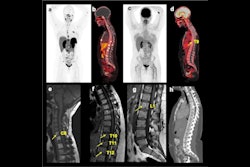
 Dual PET imaging in Case Two illustrates a patient with discordant disease. FDG PET (b & d) shows FDG uptake in tail of pancreas primary lesion (yellow arrow), as well as multiple hepatic metastases (yellow boxes), with enlarged liver span. DOTATATE PET on left (a) shows several hepatic metastases that do not demonstrate DOTATATE uptake above background of liver parenchyma. The liver lesions in (c) demonstrate moderate FDG uptake in liver lesions, with no corresponding DOTATATE avidity (white box) or central photopenia (white arrow). This discordance in dual PET imaging corresponds to a NETPET score of 5. This suggests de-differentiated disease and a less favorable prognosis. The patient was not suitable for Lutate treatment and received chemotherapy.
A 45-year-old woman was diagnosed with metastatic grade 2 pancreatic NET in 2021. Dual PETs showed discordant disease with multiple FDG-avid, non-DOTATATE-avid hepatic metastases (NETPET score 5). She started chemotherapy and lanreotide treatment. Restaging dual PETs showed a mixed response, with reduced size of the pancreatic primary but increased FDG avidity in the liver (NETPET score 5).
The patient underwent selective internal liver-directed radiation therapy with stable disease over two years. Subsequent restaging dual PETs showed progressive but concordant disease (DOTATATE > FDG avidity; NETPET score 3). She had two cycles of Lutate, with early re-staging to assess response given intermediate NETPET score. This showed disease progression, with newly discordant disease in the liver (FDG avid, non-DOTATATE avid, NETPET score 5). Due to disease de-differentiation, further cyles of Lutate were cancelled and chemotherapy was recommended.
To view the Sydney group's RANZCR 2025 poster, click here. The co-authors were Drs. S. Dave, F. Kilani, E. Bernard, P. Roach, N. Pavlakis, D. Chan, and S. Ayesa.