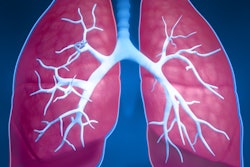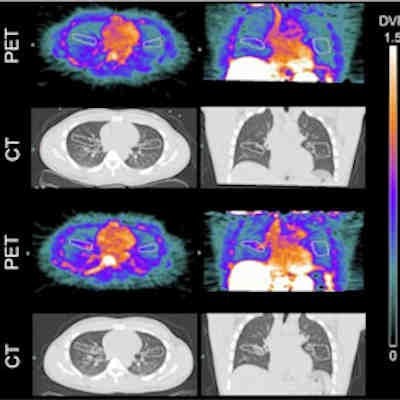
Functional lung imaging has been developing very rapidly in recent years, across all modalities, and this progress has been made possible by advances in artificial intelligence and machine learning. That's the view of the contributors to a free podcast issued on 30 June by the British Institute of Radiology (BIR).
"Pulmonary MRI provides structural and quantitatively functional images of the lung without ionising radiation...recent MRI techniques including ultrashort and zero echo time are expanding clinical opportunities for pulmonary MRI," said one of the contributors, Prof. Philippe Grenier from Paris, past president of the European Society of Radiology.
Other experts who feature in the BIR podcast are Prof. Eric Hoffman, Dr. Nick Screaton, and Prof. Joon Beom Seo. They explain why functional imaging of the lungs is an important area of research. Topics covered include the main benefits and challenges of MRI, CT, and PET, how artificial intelligence fits into the functional lung imaging space, and how the field will develop in the future.
You can listen to the podcast on the BIR website.