
Swedish image analysis software developer AMRA Medical is collaborating with the National University of Singapore's Yong Loo Lin School of Medicine on a study aimed at improving the understanding of nonalcoholic fatty liver disease (NAFLD).
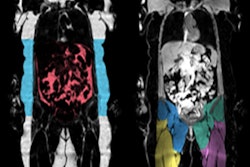
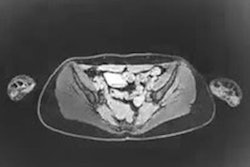
The project will contribute to Singapore's Ensemble of Multi-disciplinary Systems and Integrated Omics for NAFLD (EMULSION) national research platform for modeling NAFLD in Singaporean and Asian populations, AMRA said. The university's researchers will utilize AMRA's rapid MRI and automated image analysis methodology to classify and quantify body measurements such as whole-body and localized fat volumes, fat fractions, and lean tissue volumes, according to the vendor.






![A normal mammogram confirmed by three-year radiologic follow-up illustrates reader-marked regions of interest (ROIs) during (A) unaided (round 1) and (B) artificial intelligence (AI)–assisted (round 2) reading. Each colored dot represents an ROI for recall by a human reader. Readers could mark more than one ROI per case, represented by multiple dots of the same color. During AI-assisted reading, the AI system displayed three visible prompts: two with suspicion of malignancy scores of 35% (left mediolateral oblique [L MLO] and craniocaudal [L CC]) and one with a suspicion of malignancy score of 10% (right craniocaudal [R CC]), shown as polygonal overlays. Without AI, six of 10 readers (60%) marked a false-positive ROI. With AI assistance, this fell to two of 10 (20%). R MLO = right mediolateral oblique.](https://img.auntminnieeurope.com/mindful/smg/workspaces/default/uploads/2026/07/2026-07-14-radiology-mammogram-ai-auto-bias.H0bYO8QlWs.jpg?auto=format%2Ccompress&fit=crop&h=112&q=70&w=112)


