
Radiographers can help improve patient outcomes when using point-of-care ultrasound (POCUS), but training and standardization are needed, according to a talk given at ECR 2026.
In her presentation, Thérèse Herlihy, PhD, from University College Dublin in Ireland, outlined the current state of POCUS use among radiographers and the competencies needed for radiographers to safely and effectively perform POCUS.
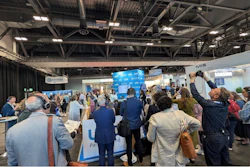
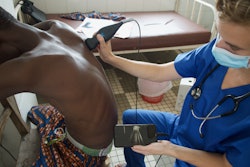
 Thérèse Herlihy, PhD, at ECR 2026 discusses the state of radiographer-performed POCUS and what's needed for expanded scope of practice.ECR
“At the end of the day, it’s supposed to be about the patient and patient care,” Herlihy said.
It may make sense for radiographers to regularly use POCUS, since they work in close proximity to radiologists. However, the data say otherwise. Herlihy and colleagues issued a survey to members of the European Federation of Radiographer Societies (EFRS). Using data from 12 respondents (each representing different countries in Europe and Asia), they found that while two-thirds of practices have radiographers perform ultrasound scanning in radiology departments, about 17% perform POCUS.
The team further found in the survey that over 91% of practices do not require POCUS-specific training courses or certification for radiographers.
And 91% also believed that radiographer-performed POCUS could have a positive impact on practices. Reasons cited included the following: lower wait times, increased patient throughput, more accurate diagnoses, and improved access for procedures.
The respondents raised some concerns, however. These included whether radiographers have the clinical knowledge needed, how this work may affect radiology worklists, and the need for training.
International training guidelines may also differ among medical societies. For example, most qualified sonographers with two years of training have several hundred to more than 1,000 clinical hours’ worth of scanning time. University College Dublin has a 1.5-year course, in which students need at least 1,000 clinical hours of scanning, Herlihy said.
Joint recommendations by the British Medical Ultrasound Society and the Royal College of Radiologists, meanwhile, say that level II training should require 500 breast ultrasound scans for specialists practicing, independent of radiology departments.
“The other thing that we have to think about is a lot of POCUS comes along because of a clinical need at that time,” Herlihy said. “If you’re going to be working in the [emergency department], is it still your 8-to-4 or your 9-to-5? Do we have a role in maybe upscaling and training and showing this is where the standard is, rather than looking to say, ‘Do we actually do it?’”
Herlihy also highlighted prior studies on POCUS’s impact on practices. One study published in 2025 found that POCUS led to a change in the primary diagnostic hypothesis in over one-third of clinical encounters and in 39% of cases. POCUS also increased diagnostic confidence by 46% in the study.
Another study published in 2023 found that the use of POCUS was tied to reduced hospitalizations, imaging costs, and the number of x-rays for hospitalized patients.
However, Herlihy said there are two sides to the same coin when it comes to these results and the potential for more radiographer involvement in using POCUS.
“We have to wonder, if imaging as a whole is more accessible, would we see the same increase?” Herlihy said. “If we had no waiting times, would there be a need for POCUS if we can move things quicker?”
She also said that while radiographers can play a role in this area, radiology departments should be careful.
“Do we want to play a role? That’s a very personal decision,” Herlihy said. “As a sonographer myself, it’s not necessarily something I want to do. I like working as part of the radiology team. I like going to see if the patient is available for further imaging, the knowledge, and the standards that actually protect us within our job.”
Herlihy concluded by saying that while more training, standards, and guidelines are needed, these issues already exist in point of care and may not need radiographers brought in.
"The responsibility for standards comes under the radiology branch in the majority of departments where we have quality assurance and auditing," she said. "When you go outside of radiology, that's where the problems start."
![Examples of ultrasound findings and techniques. (A) Images in a 39-year-old male patient with a mass in the left thigh. The mass is heterogeneous on the B-mode US image (compared with the patient in D) and showed increased microvascularity (superb microvascular imaging [SMI]) and shear-wave elastography (SWE) values. Undifferentiated pleomorphic sarcoma was diagnosed at biopsy (with pleomorphic rhabdomyosarcoma in surgical specimen). (B) Images in an 18-year-old male patient with a mass in the left leg. The mass is hypoechoic on the B-mode image, with no other findings suggestive of malignancy. The lesion is in contact with the cortex of the tibia, which is slightly irregular. CT revealed a doubtful anteromedial tibial erosion. The microvascular study demonstrated high vascularization, suggestive of malignancy. Periosteal Ewing sarcoma was diagnosed with both histologic and immunohistochemical confirmation. (C) Images in a 69-year-old female patient with a lump growing on the outside of the left leg. Multiple SWE examinations were performed (please note the high values obtained in the measurements, whereas the color map highlights the stiffness relative to adjacent tissues). SMI showed areas of increased vascularization to target for sampling. Undifferentiated spindle cell sarcoma was diagnosed at biopsy, with residual leiomyosarcoma in the surgical specimen after neoadjuvant therapy. (D) Images in a 56-year-old female patient with a mass in the right thigh. The mass is heterogeneous at both B-mode ultrasound (similar to patient A) and MRI (coronal T2-weighted spectral attenuated inversion recovery [SPAIR]; T1-weighted pre-contrast and postcontrast imaging), which even shows uptake after the administration of paramagnetic contrast material, which is traditionally suggestive of malignancy. Low values at SMI and elastography are suggestive of benignity. Spindle cell lipoma was diagnosed at biopsy, with atypical spindle cell lipomatous tumor in the surgical specimen.](https://img.auntminnieeurope.com/mindful/smg/workspaces/default/uploads/2026/08/images-radiol250278fig2.APCFLSvX6p.jpg?auto=format%2Ccompress&fit=crop&h=100&q=70&w=100)


![Examples of ultrasound findings and techniques. (A) Images in a 39-year-old male patient with a mass in the left thigh. The mass is heterogeneous on the B-mode US image (compared with the patient in D) and showed increased microvascularity (superb microvascular imaging [SMI]) and shear-wave elastography (SWE) values. Undifferentiated pleomorphic sarcoma was diagnosed at biopsy (with pleomorphic rhabdomyosarcoma in surgical specimen). (B) Images in an 18-year-old male patient with a mass in the left leg. The mass is hypoechoic on the B-mode image, with no other findings suggestive of malignancy. The lesion is in contact with the cortex of the tibia, which is slightly irregular. CT revealed a doubtful anteromedial tibial erosion. The microvascular study demonstrated high vascularization, suggestive of malignancy. Periosteal Ewing sarcoma was diagnosed with both histologic and immunohistochemical confirmation. (C) Images in a 69-year-old female patient with a lump growing on the outside of the left leg. Multiple SWE examinations were performed (please note the high values obtained in the measurements, whereas the color map highlights the stiffness relative to adjacent tissues). SMI showed areas of increased vascularization to target for sampling. Undifferentiated spindle cell sarcoma was diagnosed at biopsy, with residual leiomyosarcoma in the surgical specimen after neoadjuvant therapy. (D) Images in a 56-year-old female patient with a mass in the right thigh. The mass is heterogeneous at both B-mode ultrasound (similar to patient A) and MRI (coronal T2-weighted spectral attenuated inversion recovery [SPAIR]; T1-weighted pre-contrast and postcontrast imaging), which even shows uptake after the administration of paramagnetic contrast material, which is traditionally suggestive of malignancy. Low values at SMI and elastography are suggestive of benignity. Spindle cell lipoma was diagnosed at biopsy, with atypical spindle cell lipomatous tumor in the surgical specimen.](https://img.auntminnieeurope.com/mindful/smg/workspaces/default/uploads/2026/08/images-radiol250278fig2.APCFLSvX6p.jpg?auto=format%2Ccompress&dpr=2&fit=crop&h=167&q=70&w=250)


